By James Vusi
Polokwane, South Africa – In a chilling account that has sent shockwaves through South Africa, a farm worker has testified in court detailing how he was allegedly forced to feed the bodies of two women to pigs in a desperate attempt to conceal evidence of their murder. The horrific accusations have exacerbated already simmering racial tensions in the country, decades after the end of apartheid.
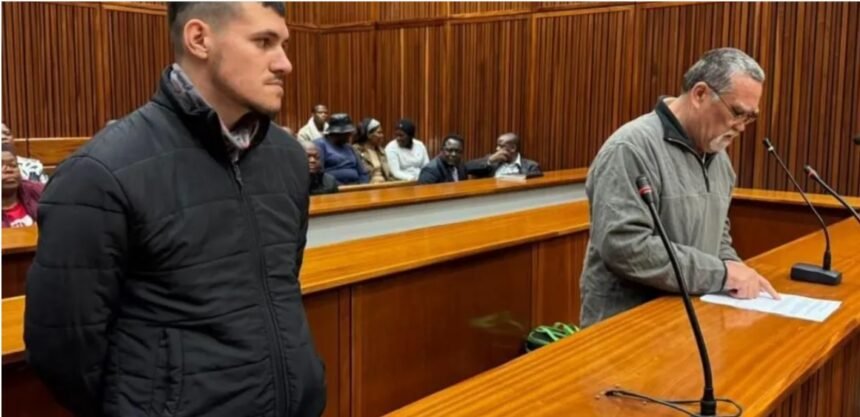
Adrian de Wet, 21, a former farm supervisor, told the Polokwane High Court that he and farm owner Zachariah Johannes Olivier, 60, shot and killed Maria Makgato, 45, and Lucia Ndlovu, 34, last year on Olivier’s farm near Polokwane in the Limpopo province. The women were allegedly on the farm searching for food at the time of the incident.
De Wet, who was initially charged with murder but turned state witness after his charges were dropped, described how Olivier ordered him to dispose of the bodies. “When pigs are hungry enough, they’ll eat anything,” De Wet recounted Olivier telling him as they prepared to throw the first victim’s body into a pig enclosure housing eight to ten adult pigs.
The court heard that on the night of August 17, 2024, De Wet and Olivier, armed with hunting rifles, lay in wait for alleged trespassers. After hearing voices, they opened fire. They discovered the first victim’s body the following morning. De Wet claims Olivier forced him to help move the body to the pigsty.
The next day, a second body was found approximately 25 meters away. De Wet alleges that he, Olivier, and another man, William Musora, 50, who is also accused of murder, then disposed of the second body in the same pig enclosure.
Upon returning to the enclosure days later, De Wet testified that they found the pigs had consumed significant portions of the women’s bodies, with images presented as evidence in court showing missing flesh from their faces, buttocks, thighs, and shoulders.
The motive for feeding the bodies to the pigs, according to De Wet, was explicitly to “dispose of the evidence.” He also stated that Olivier subsequently destroyed the hunting rifles used in the killings by cutting them up with an angle grinder, burning the wooden parts, and discarding the remains and spent cartridges in a borehole.
The trial has deeply affected those present, with the son of victim Maria Makgato reportedly crying throughout De Wet’s testimony, while Olivier was seen wiping away tears.
The case has ignited widespread anger and renewed discussions about racial disparities and historical injustices that persist in South Africa. While apartheid officially ended 30 years ago, significant inequalities remain, particularly in rural areas. The majority of privately owned farmland is still held by the white minority, while the majority of farm workers, who are black, often face low wages and precarious living conditions. This economic disparity fuels resentment and has contributed to a complex and often fraught relationship between black and white communities, with white farmers frequently citing concerns about high crime rates.
The defense lawyers for Olivier and Musora are expected to continue their cross-examination of Adrian de Wet next Wednesday. The outcome of this trial is anticipated to have significant implications for the ongoing dialogue surrounding justice, race, and land ownership in South Africa.